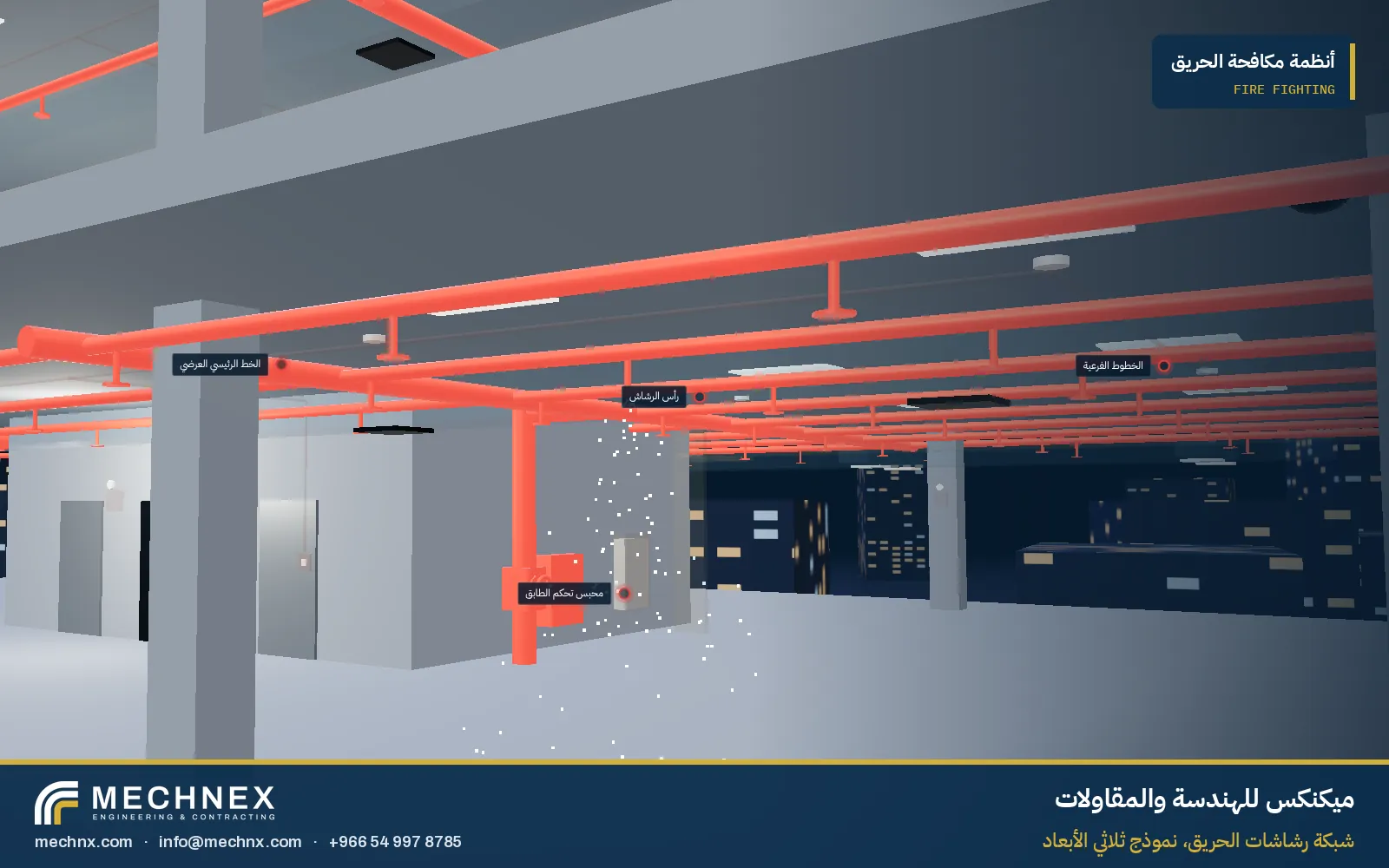
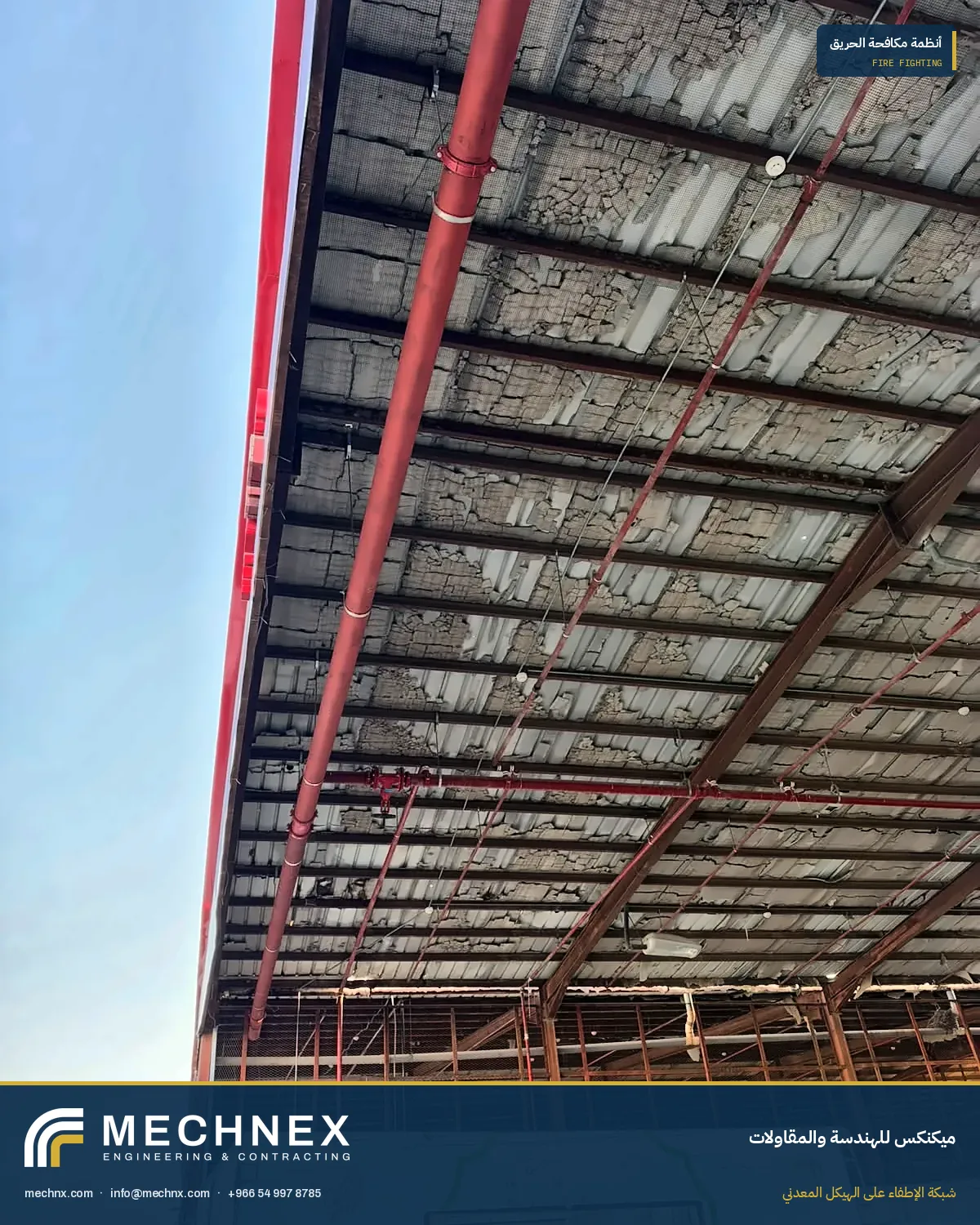
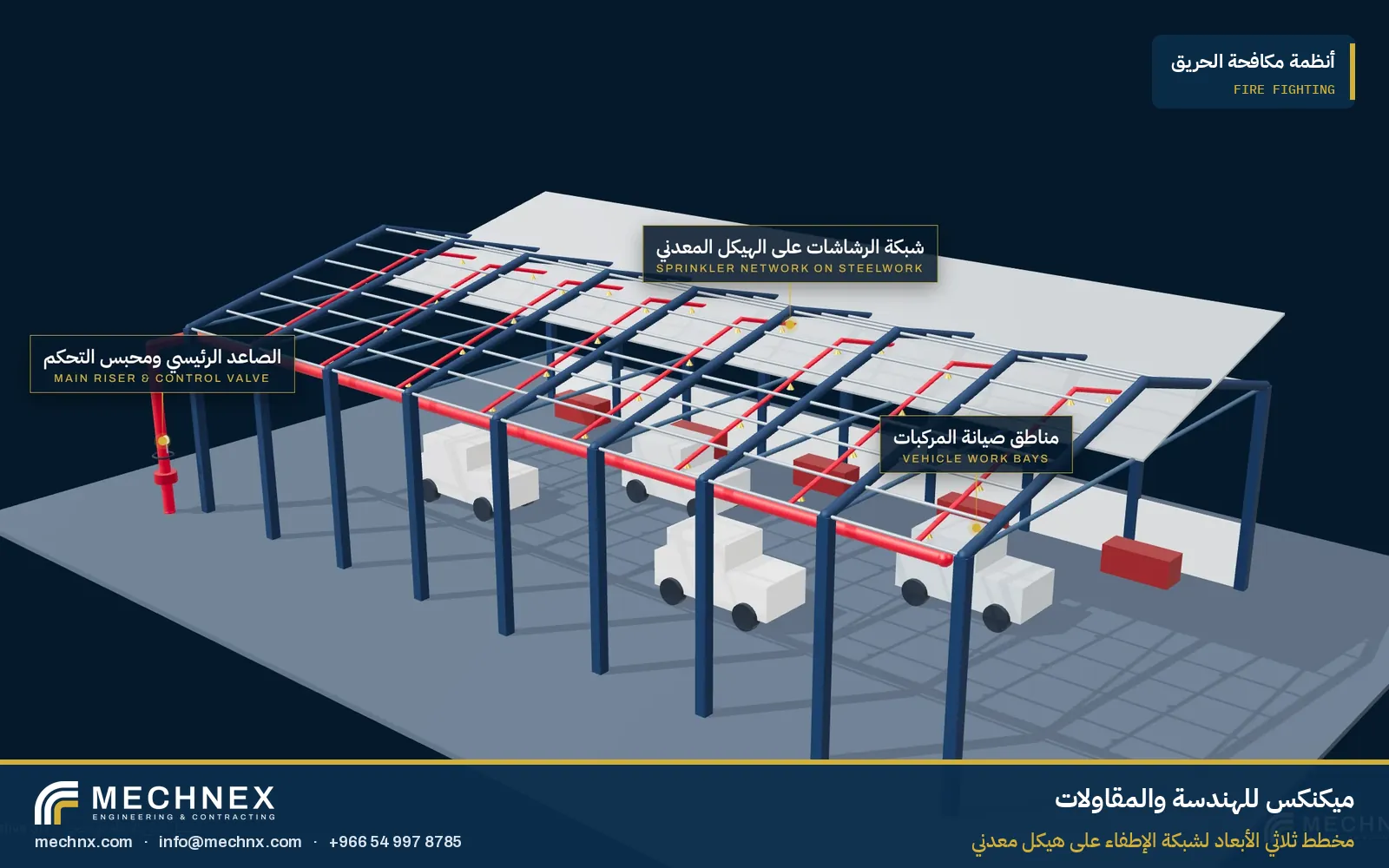
Types of fire sprinkler systems: wet, dry, pre-action and deluge
Not all sprinkler systems are the same. The type is chosen by the space, its temperature and the hazard of its contents. A plain guide to the four main types.
Wet pipe
Pipes are always full of water under pressure. When fire heat reaches a head's operating temperature, that head opens and water flows immediately. It is the most common, simplest and lowest-maintenance type, suited to offices, commercial and residential buildings, hotels and conditioned warehouses.
Dry pipe
Pipes hold pressurised air or nitrogen, with water held back by a dry valve. When a head opens, pressure drops, the valve trips and water flows. Used where water could freeze, such as cold rooms.
Pre-action
Needs two events: detection from the alarm system opens the control valve to fill the pipes, then a head opens on heat. It reduces the risk of accidental discharge, so it suits server rooms, archives, museums and water-sensitive areas.
Deluge
All heads are open; on a detection signal the deluge valve opens and every head discharges together. Used for high, fast-spreading hazards such as large transformers, some industrial areas and flammable-liquid areas, sometimes with foam.
What decides the design
Hazard classification, storage type and height, and water supply and pressure — per the project specification, reference standards such as NFPA 13 and the authority having jurisdiction. That is why a correct sprinkler system starts with a hydraulic calculation that sizes pipes, pumps and tank.